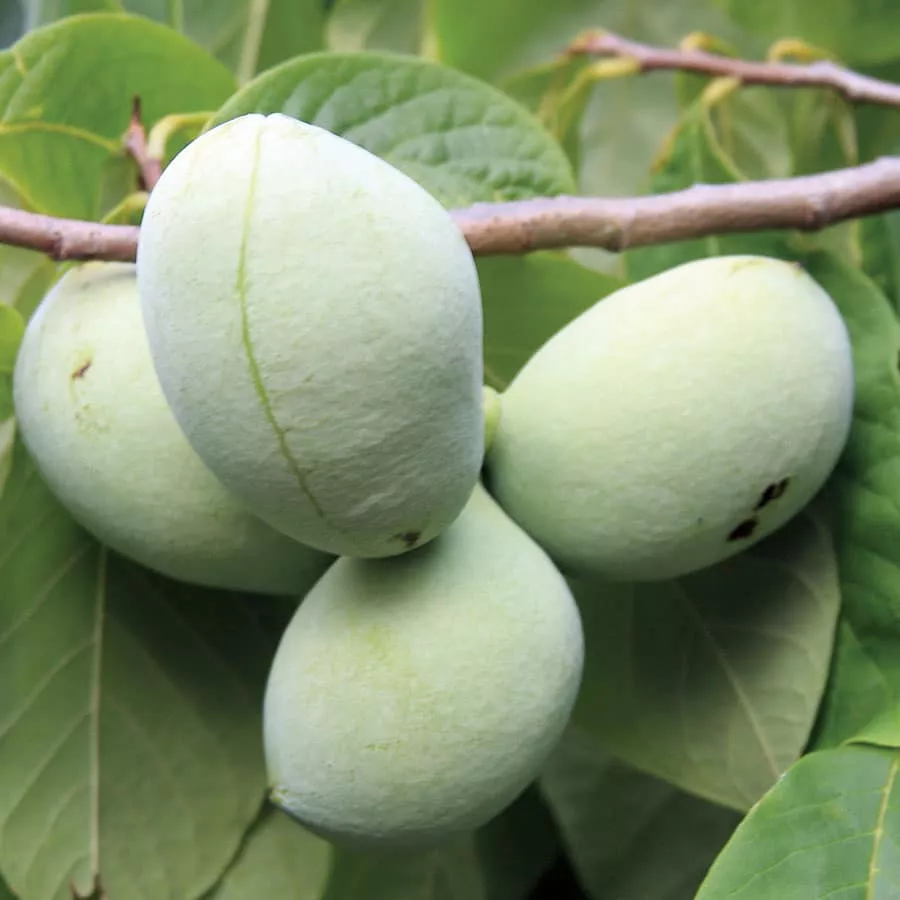
Pawpaw (Mango)
Original price was: $31.99.$24.79Current price is: $24.79.
Description
Mango is a classic pawpaw cultivar known for its smooth eating quality and tropical-leaning flavor. It’s often recommended as a great entry point for growers who want a pawpaw that reads clean and sweet rather than intense.
When fully ripe, the fruit softens and develops a custard-like texture with notes often compared to mango and banana. It’s easy to enjoy fresh, scoopable, and especially satisfying when you catch it at peak softness and aroma.
Mango ripens mid-season within pawpaw varieties—typically late summer depending on region—and rewards careful harvest timing. Like all pawpaws, it needs to fully soften before eating for the best texture and flavor.
Overview
- Native North American fruit tree with tropical-style flavor
- Known for smooth texture and clean, sweet eating quality
- Mid-season within pawpaw varieties; late summer ripening
- Cross-pollination required for consistent fruit set
- Best success comes from gentle planting with minimal root disturbance
Growing Details
Latin Name: Asimina triloba ’Mango’Site and Soil: 1/2 day to full day of sun; well-drained soilChill Requirement: Not typically expressed in chill hours for pawpaws; best performance in temperate regions with warm summersHardiness: USDA Zone 5–9Rootstock: Grafted onto pawpaw rootstockBearing Age: 3–5 years after plantingSize at Maturity: Typically 15–25 ft tall and wide; can be maintained smaller with pruningBloom Time: Mid-springRipening Time: Mid-season within pawpaw varieties; late summer (varies by region)Fruit Weight: Commonly ~5–7 oz per fruit (varies by growing conditions)Seed Content: Moderate; typical of mango-type pawpaw selectionsPollination: Pollination required; plant a genetically distinct pawpaw within 20–30 feetPests & Diseases: Generally low disease pressure; few serious pest issuesYield: Moderate to good once established with proper pollination
Additional Notes
- Grower’s Insight: Pawpaw success is won in the first season—keep roots undisturbed, hold steady moisture, and give young trees some shelter while they establish.
- Regional Insight: Pawpaws thrive across many temperate regions with warm summers; in cooler summer areas, maximize heat and protect young trees so establishment isn’t slowed.
- Harvest fruit only when fully ripe; pawpaws eaten underripe won’t show their best quality.
- Fruit is highly perishable and best enjoyed shortly after harvest.
- Explore more pawpaw varieties in our collection: Pawpaw Trees
Related products
-
Stoke Red Apple Tree
Original price was: $47.20.$23.81Current price is: $23.81. -
Black Twig Apple Tree
Original price was: $32.80.$25.94Current price is: $25.94. -
Idared Apple Trees
Original price was: $28.00.$15.28Current price is: $15.28. -
Moonglow Pear Trees
Original price was: $40.80.$29.62Current price is: $29.62. -
Loquat (Christmas)
Original price was: $39.99.$28.67Current price is: $28.67. -
Fig Tree (Desert King)
Original price was: $15.99.$10.12Current price is: $10.12. -
Nova Spy Apple Trees
Original price was: $32.80.$24.07Current price is: $24.07. -
Cox Orange Pippin Apple Tree
Original price was: $32.80.$21.84Current price is: $21.84.